Types of Charging: How Long it Takes to Charge
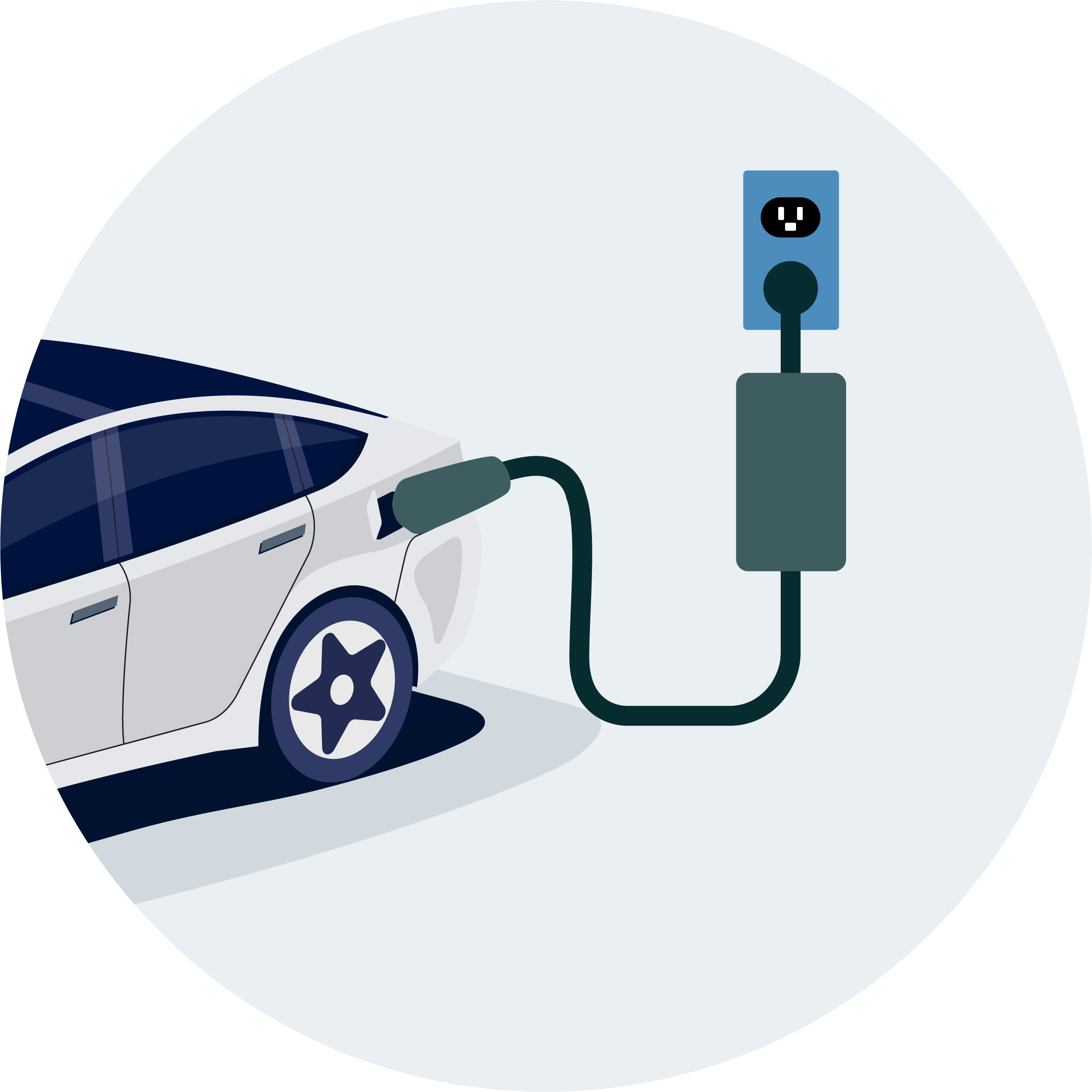
Level 1
Uses a standard 120-volt wall outlet. Adds about 40 miles of range per 8 hours, perfect for overnight charging and plug-in hybrid electric vehicles.
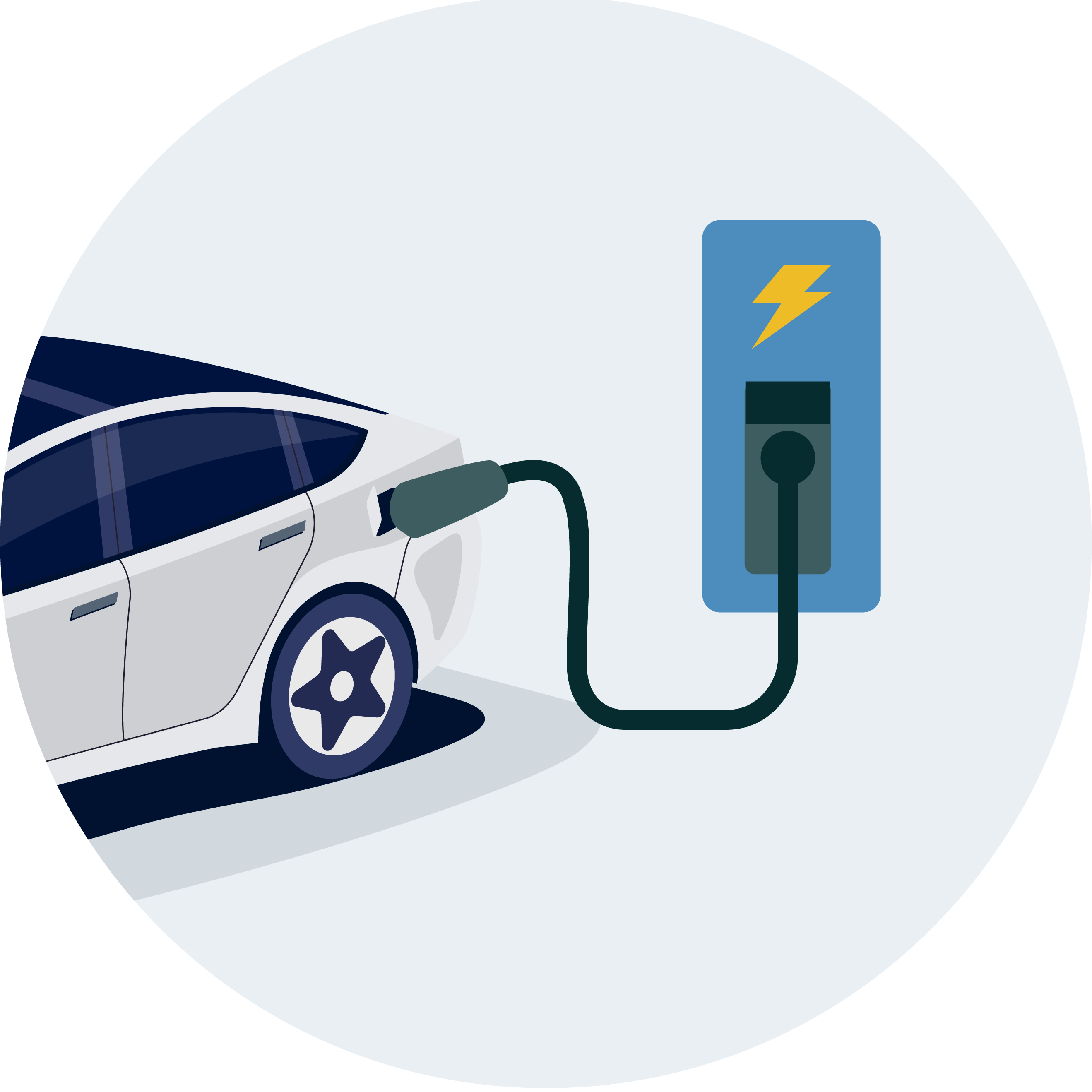
Level 2
Requires a 240-volt outlet (like a clothes dryer). Adds 14–35 miles per hour of charging. Many battery-electric vehicle drivers install Level 2 chargers at home for convenience.
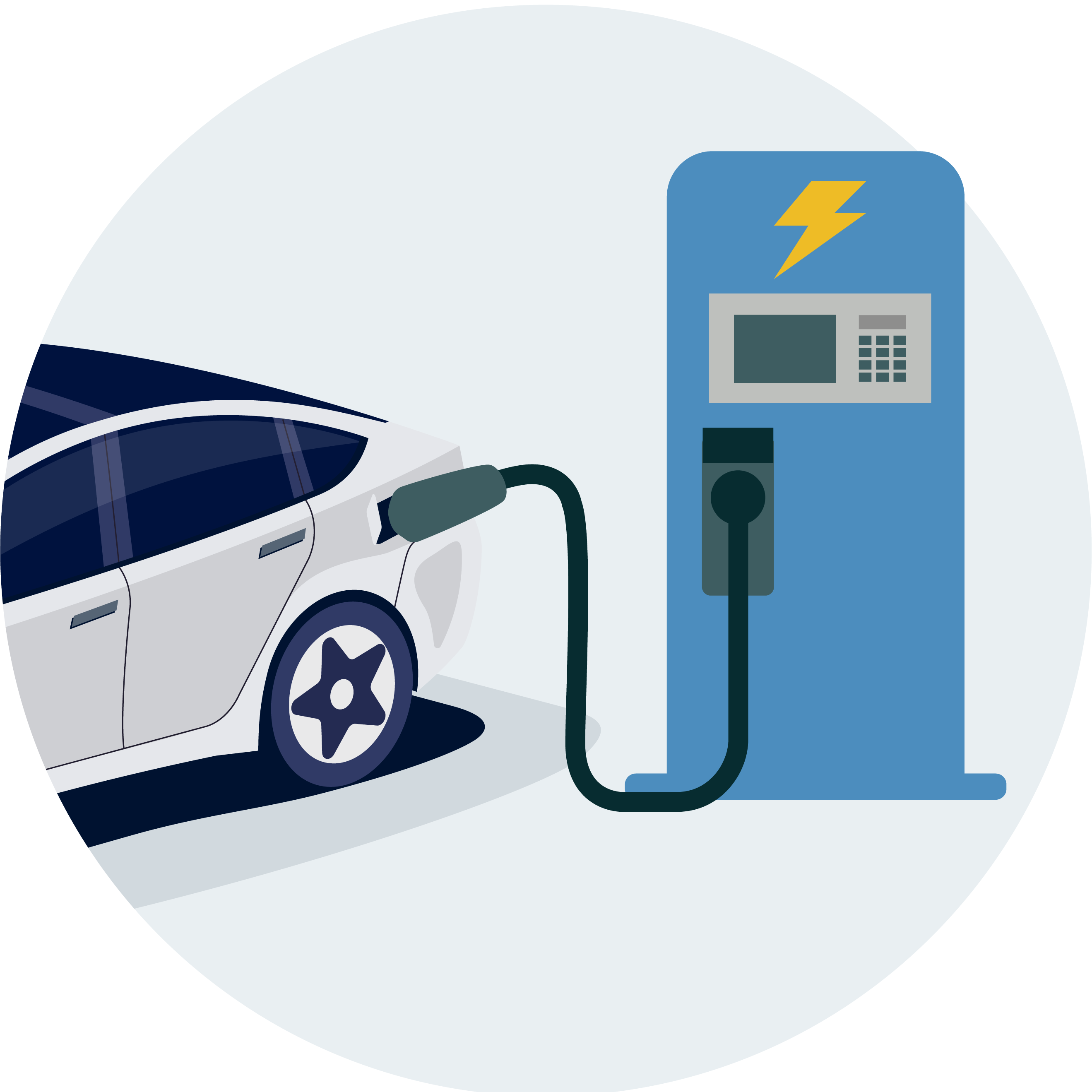
DC Fast Charging/ Supercharging (Level 3)
Operates at 480 volts. Standard DC fast charging adds 100‒150+ miles of range in about 30 minutes while high-power charging adds 180-250 miles in 20-30 minutes and Tesla Superchargers add up to 200 miles in 15 minutes. Available at public stations, fast chargers are expanding across California shopping centers and travel corridors.
Use the EV Charging Station Map to find nearby charging. Most built-in vehicle navigation systems highlight local charging stations.
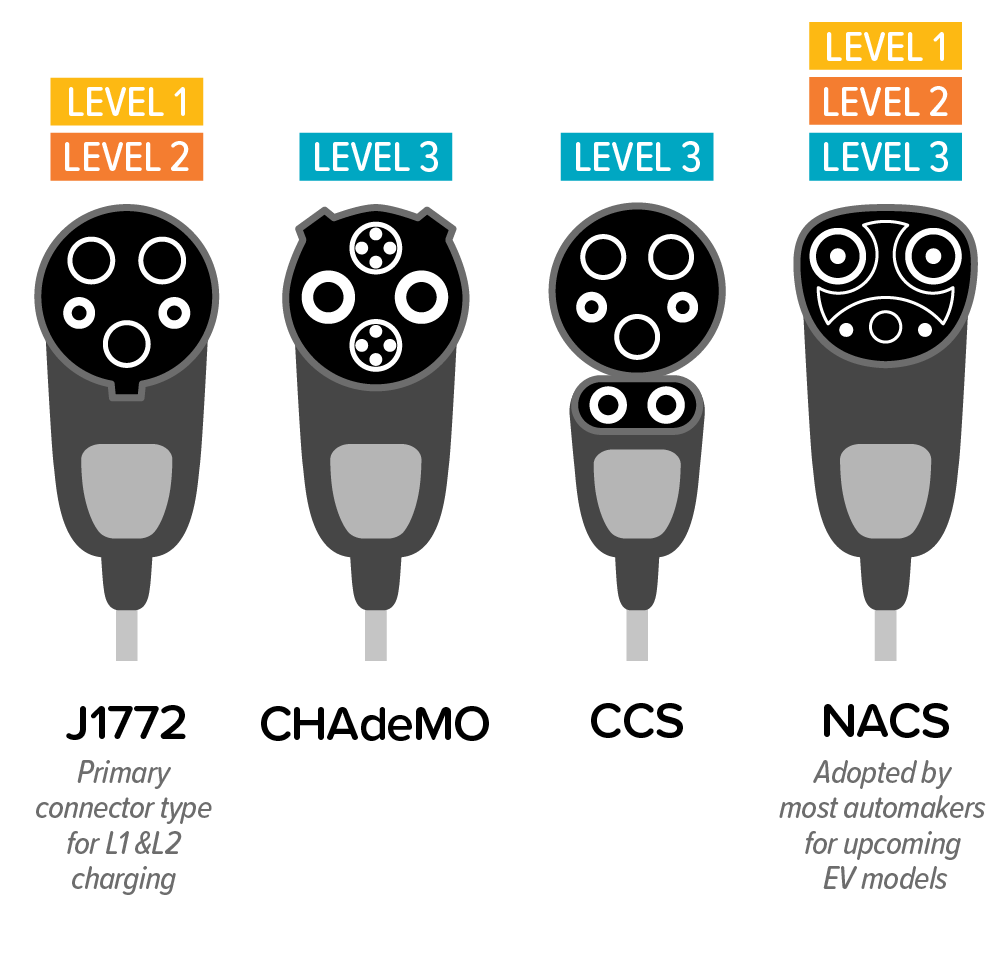
Connectors & Adapters
Because multiple connector types have been used over the years, including CHAdeMO, CCS, NACS, and the Level 2 J1772 plug, drivers may need an adapter to use certain public chargers. Charging stations do not always offer every connector type, so adapters can expand access by allowing a vehicle with one port type to connect to a different plug. Currently, most automakers and charging locations are adopting the North American Charging Standard (NACS) which is the same connector used at Tesla’s Supercharger network.
If you drive an older model, you can still use public chargers by carrying the right adapter. Two are widely available:
- NACs adapter for a J1772 Level 2 charger
- NACs adapter for a CHAdeMO DC Fast Charger
Dealers sometimes include adapters with new or used EV purchases. Don’t forget to ask your dealership.
Smart adapter tips
- Buy vehicle-specific, manufacturer-approved adapters.
- Inspect before you plug in and seat the connection firmly.
- Want more information? EVgo’s concise “dos and don’ts” is a handy checklist.
Charging at Home
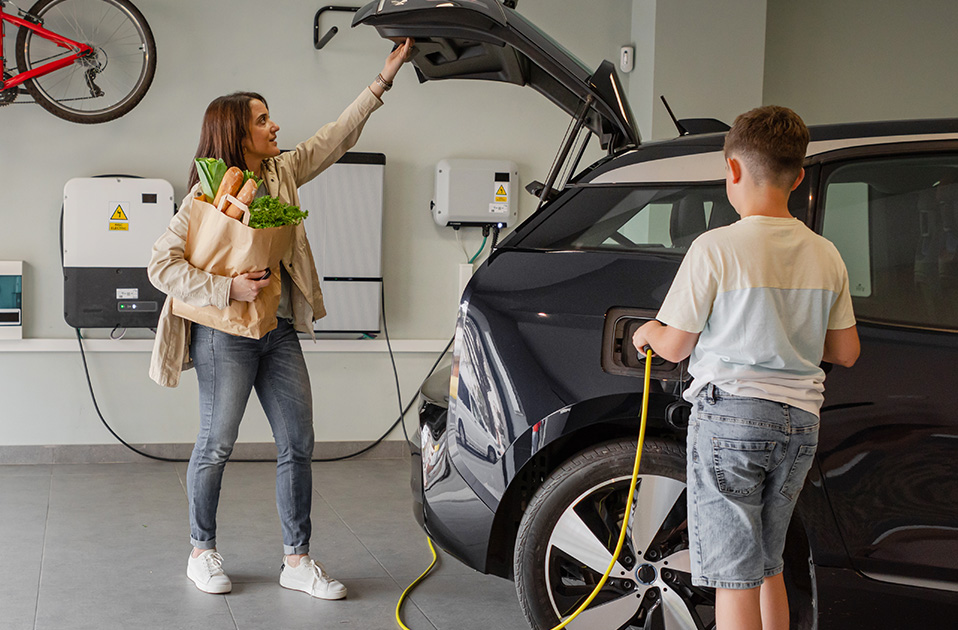
Home charging is one of the best parts of EV ownership.
- Level 2 chargers allow users to program and schedule vehicle charging during preferred hours.
- Charge overnight while you sleep when electricity rates are lowest.
- Use a standard outlet (Level 1) or a Level 2 charger. It’s like having your own gas pump.
- Receive a Level 1 charging cord with most new EVs at no extra cost.
- Discover incentive programs that help cover Level 2 charger installation costs.
- Find more information about home charging options.
Hydrogen Fueling
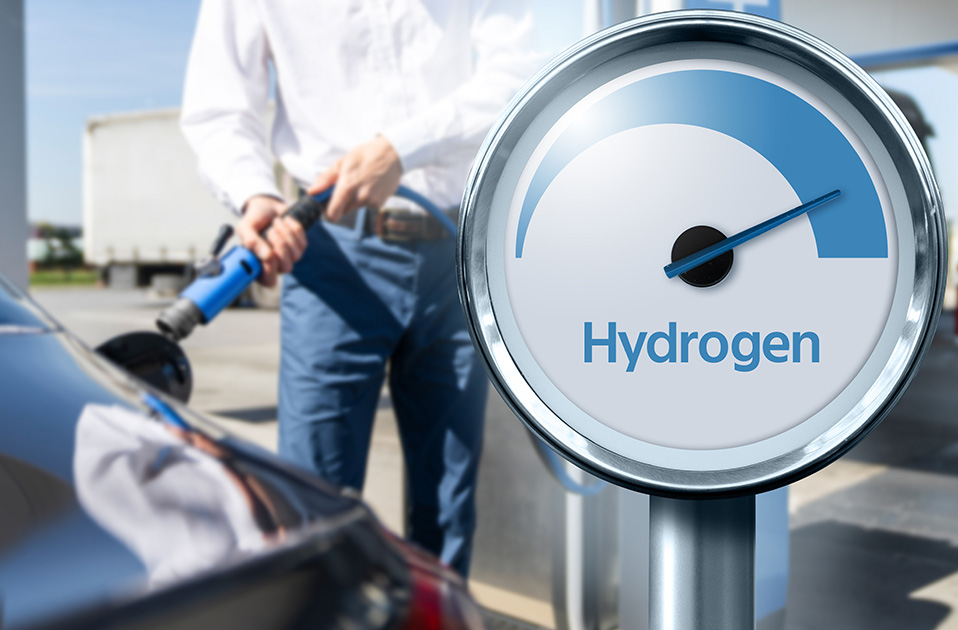
If you drive a hydrogen fuel cell electric vehicle, refueling is similar to filling up your gas tank.
- Fill up in 3‒5 minutes at a hydrogen station.
- Get 300‒400 miles of range per tank.
- See the Hydrogen Fueling Map for fueling locations.
“Cost of ownership is way better”
The ease of charging at home, as well as the low electricity rate, makes the cost of ownership way better than your typical internal combustion engine alternative.
Angel
Battery-electric vehicle owner
“It was the right choice for me”
Personally, with the rebates, never having to buy gas, nearly $0 in maintenance and readily available charging at my home, office and via the Plugshare app, it was the right choice for me.
Laurel
Battery-electric vehicle owner
Charging and Fuel Costs
Estimated Cost per 100 Miles: California EV Charging vs. Gasoline & Hydrogen
| Charging Method | Rate (per kWh) | Cost per 100 Miles |
|---|---|---|
| Home Charging | ~$0.26 (TOU) | ~$7 |
| Public Level 2 | ~$0.30 | ~$8 |
| DC Fast Charging | ~$0.40–$0.50 | ~$11 |
| Gasoline (for comparison) | ~$20 (25 mpg, $5/gal) | |
| Hydrogen (for comparison) | ~$55 (65 miles /kg, $36/kg) |
Electric Vehicle Charging
The cost of EV charging depends on many factors, like where, when, and how you charge, your home electricity rate or charging network pricing, and the efficiency of your EV.
The average residential electricity rate in California is among the highest in the nation at $0.30‒$0.33 per kWh. However, electricity prices vary by the time of day, and many electric utilities offer lower time-of-use (TOU) EV charging rates at night. Charging overnight and during off-peak hours can cut costs by 25‒30%.
Workplace and public Level 2 charging may be free, subsidized, or metered at modest rates. Typically, fast charging is at premium pricing, sometimes costing 2‒3 times as much as home charging.
Sources: US Power & Light (2025), San Francisco Chronicle (2025), Governor’s Wind Energy Coalition (2025), U.S. Department of Energy (2025)
Hydrogen Refueling
Hydrogen fuel cell electric vehicles make their own electricity on board using hydrogen and oxygen to create an electrochemical reaction that generates an electrical current. Electricity is fed into a battery, and from there, the vehicle runs like a battery-electric vehicle. The only emission is water vapor.
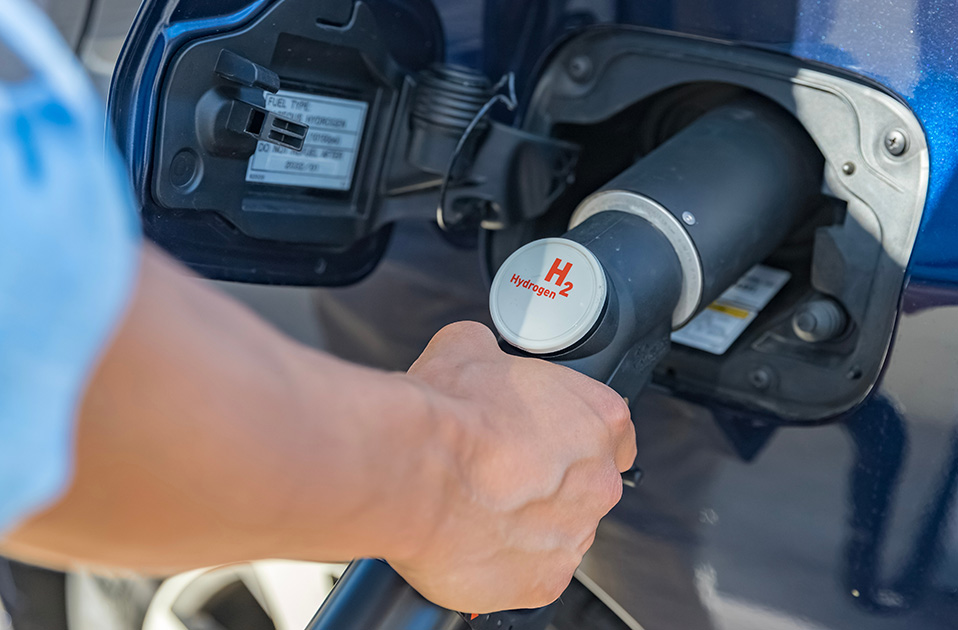
Refueling a hydrogen fuel cell electric vehicle is a lot like gasoline cars. Compressed hydrogen gas is stored at refueling stations and dispensed by what looks like a gas pump, but with a high-pressure nozzle that locks onto the vehicle’s fueling port. Filling up only takes about 5 minutes.